E-commerce Marketing Playbook
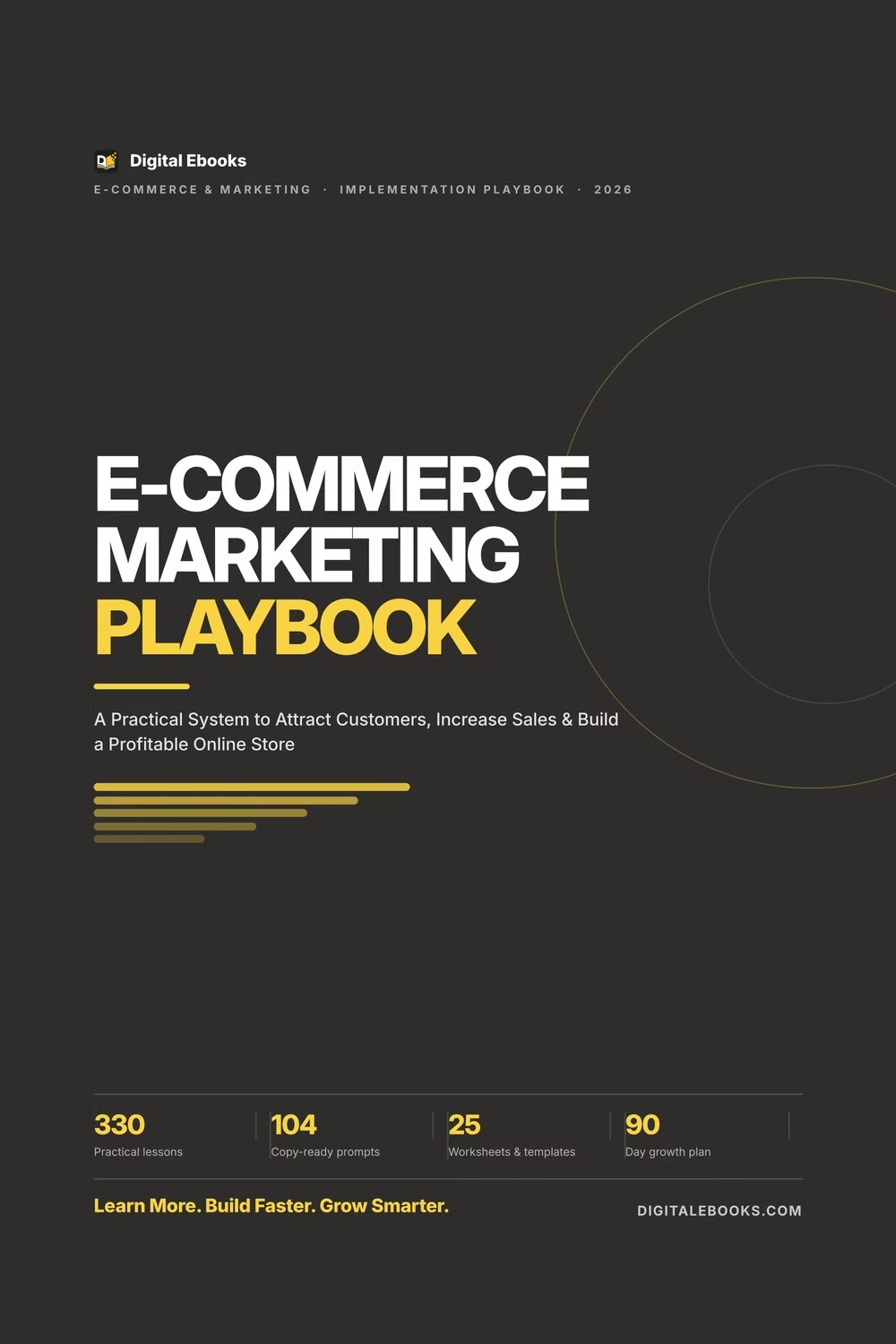
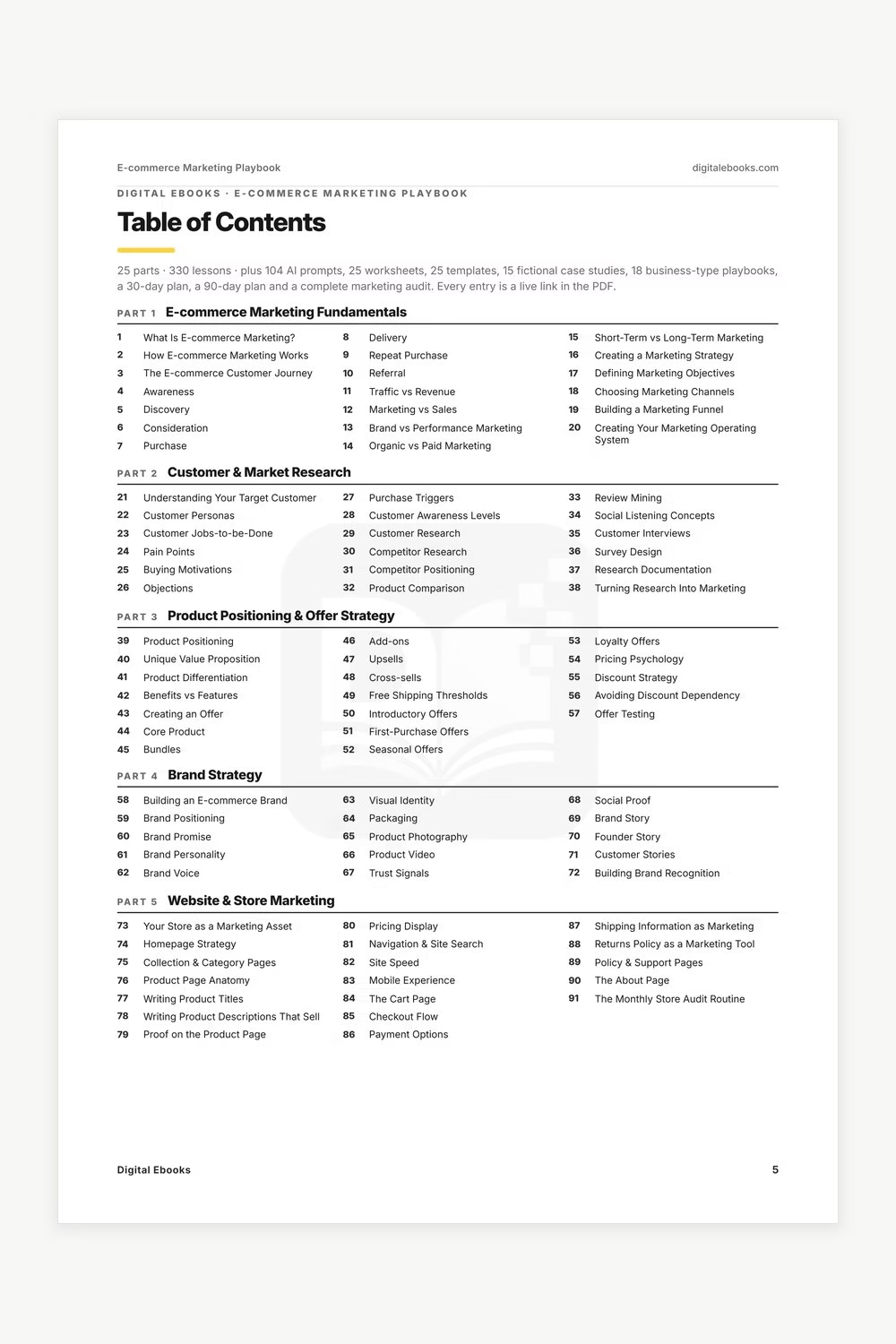
A complete e-commerce marketing system: 330 lessons across research, positioning, brand, store, SEO, content, social, WhatsApp, email, creators, affiliates, paid ads, conversion, retention, analytics and budget. Includes 104 copy-ready AI prompts, 25 printable worksheets, 25 templates, 18 business-type playbooks, 575 ready-made ideas and scripts, a 30-day plan, a 90-day plan and a 17-section marketing audit. No guaranteed-results claims and nothing that breaches platform rules. 276-page PDF.
One-time payment. No subscription.
- Secure payment via UPI, Cards, NetBanking
- Instant download. 30-day money-back guarantee, no questions asked.
Product details
- Pages
- 276
- Formats
- Reading time
- About 5 hours
- Level
- Beginner
- Language
- English
- Size
- 9.9 MB
Overview
Most online stores do not have a traffic problem. They have a problem with what happens to the traffic they already have. This is a working system, not a book about marketing theory. It takes you through the whole arc — research, positioning, brand, store, SEO, content, social, WhatsApp, email, creators, affiliates, paid ads, conversion, retention, analytics and budget — in the order you should actually do them.
By the end you should know your gross margin and the most you can afford to pay for a customer, know exactly which stage of your funnel is losing people, have four automated email flows running, have one channel proven or honestly abandoned, and have a 30-day plan and a 90-day plan you are already working through. No income promises, no growth hacks that breach platform rules, and several sections explaining why the tactics other books teach are a bad idea.
What you get
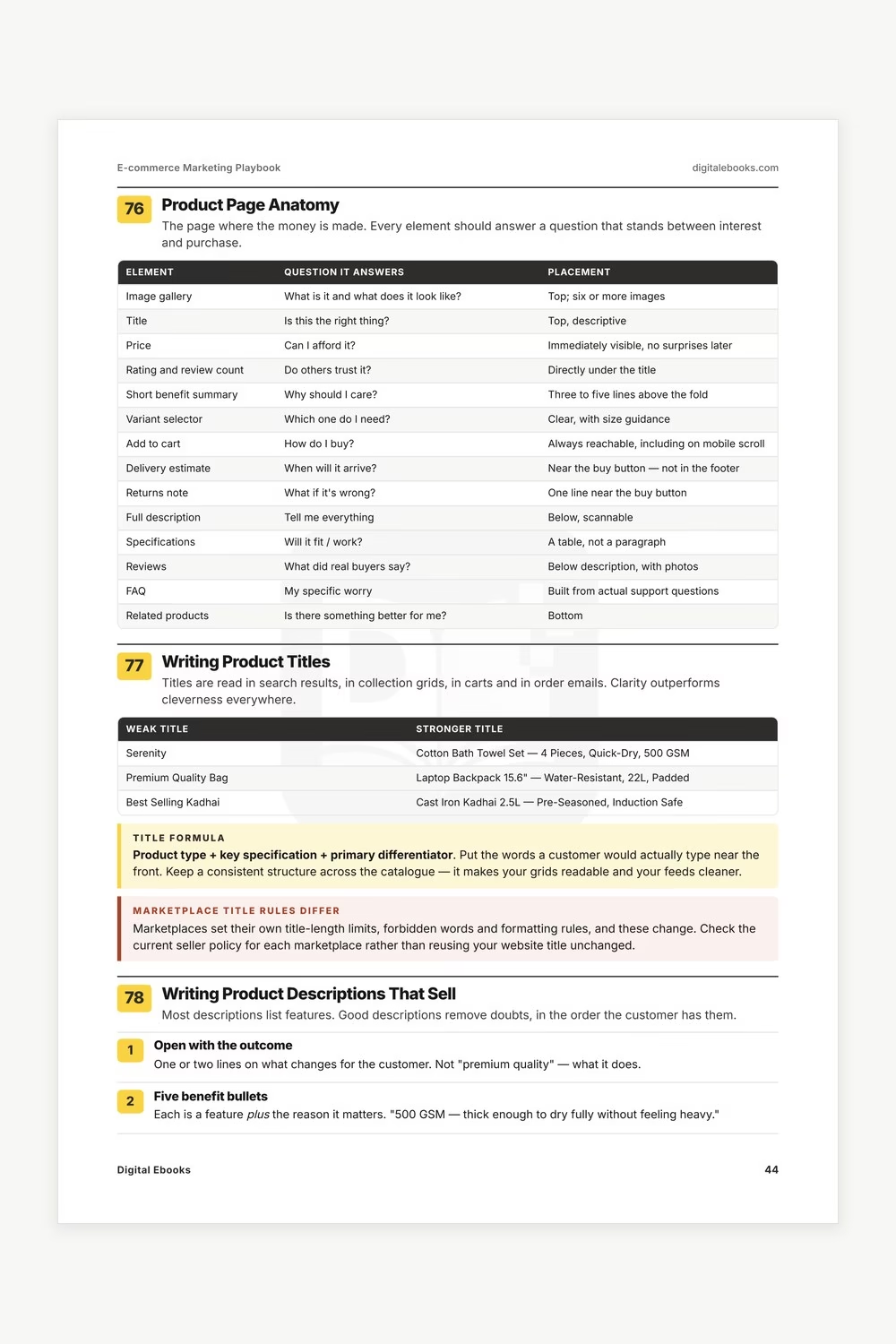
- 330 numbered lessons across 25 parts, each one short enough to read in a break and specific enough to act on.
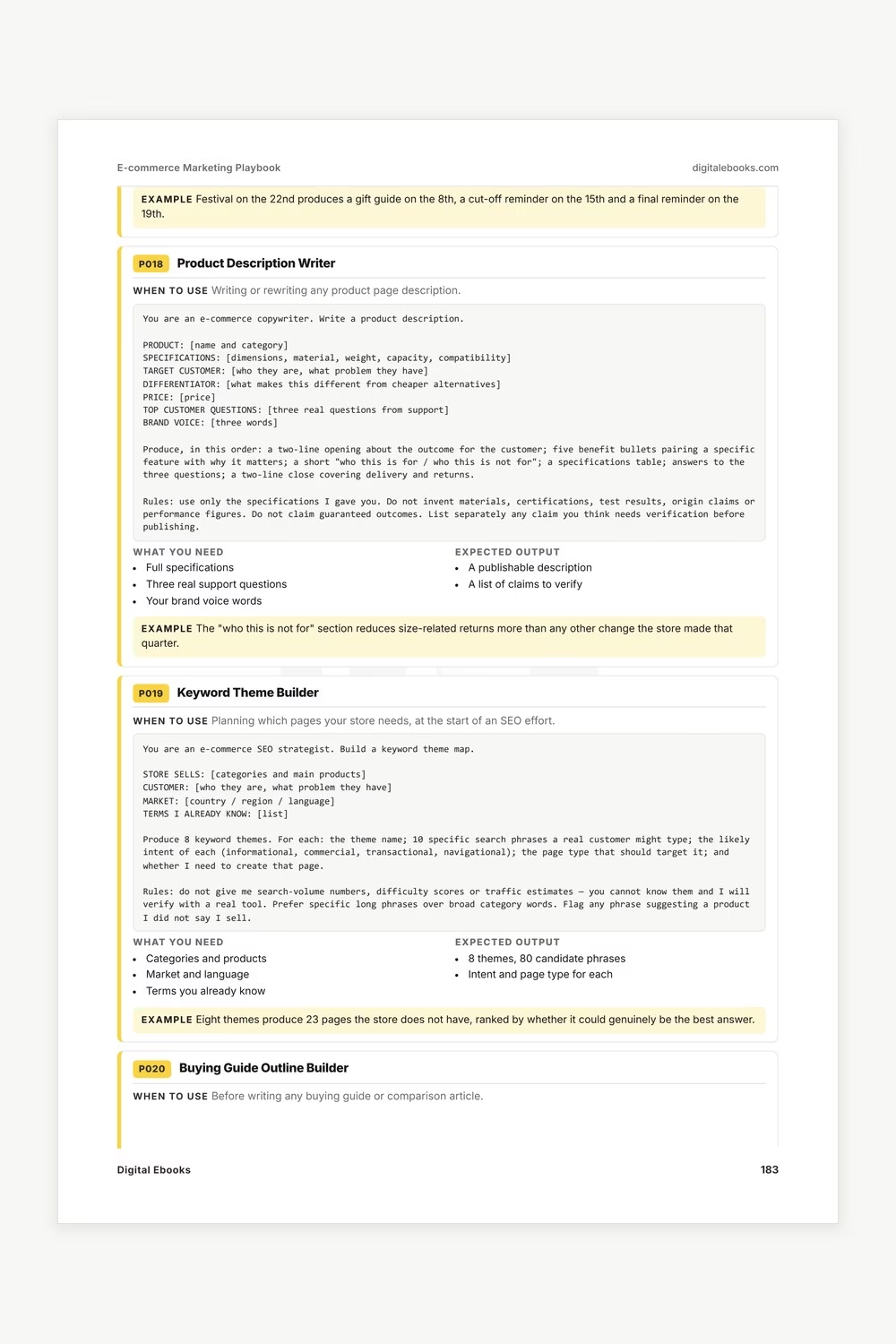
- 104 copy-ready AI prompts (P001–P104) in 22 categories, each with when to use it, the inputs required, the expected output and a worked example — and each written to stop the model inventing figures, specifications or reviews you did not give it.
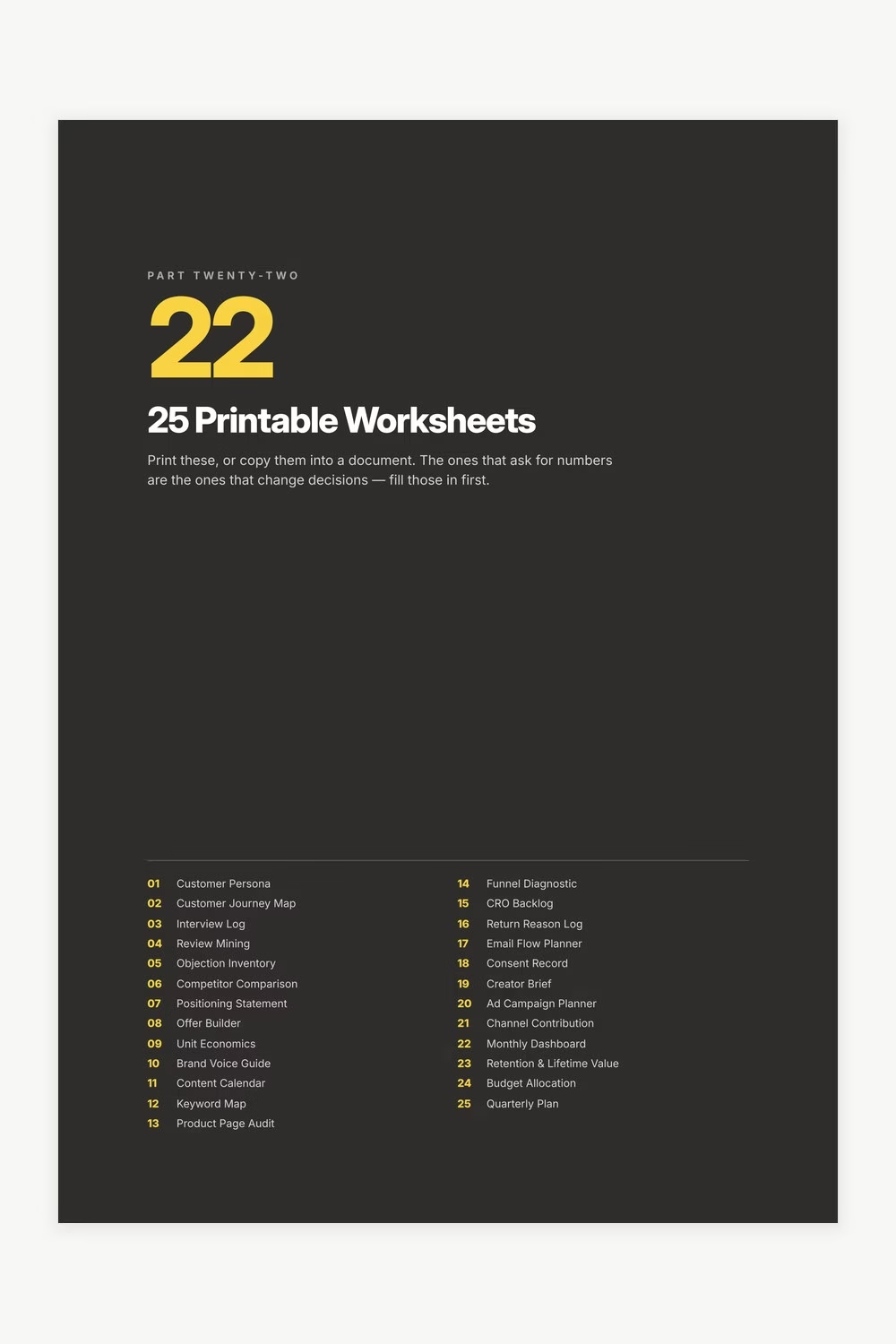
- 25 printable worksheets — unit economics, funnel diagnostic, product page audit, return reason log, channel contribution, the monthly dashboard, lifetime value, budget allocation and the quarterly plan.
- 25 copy-and-fill templates — product descriptions, buying guides, about pages, shipping and returns structures, review responses, creator agreements, affiliate terms, email flows and the annual plan.
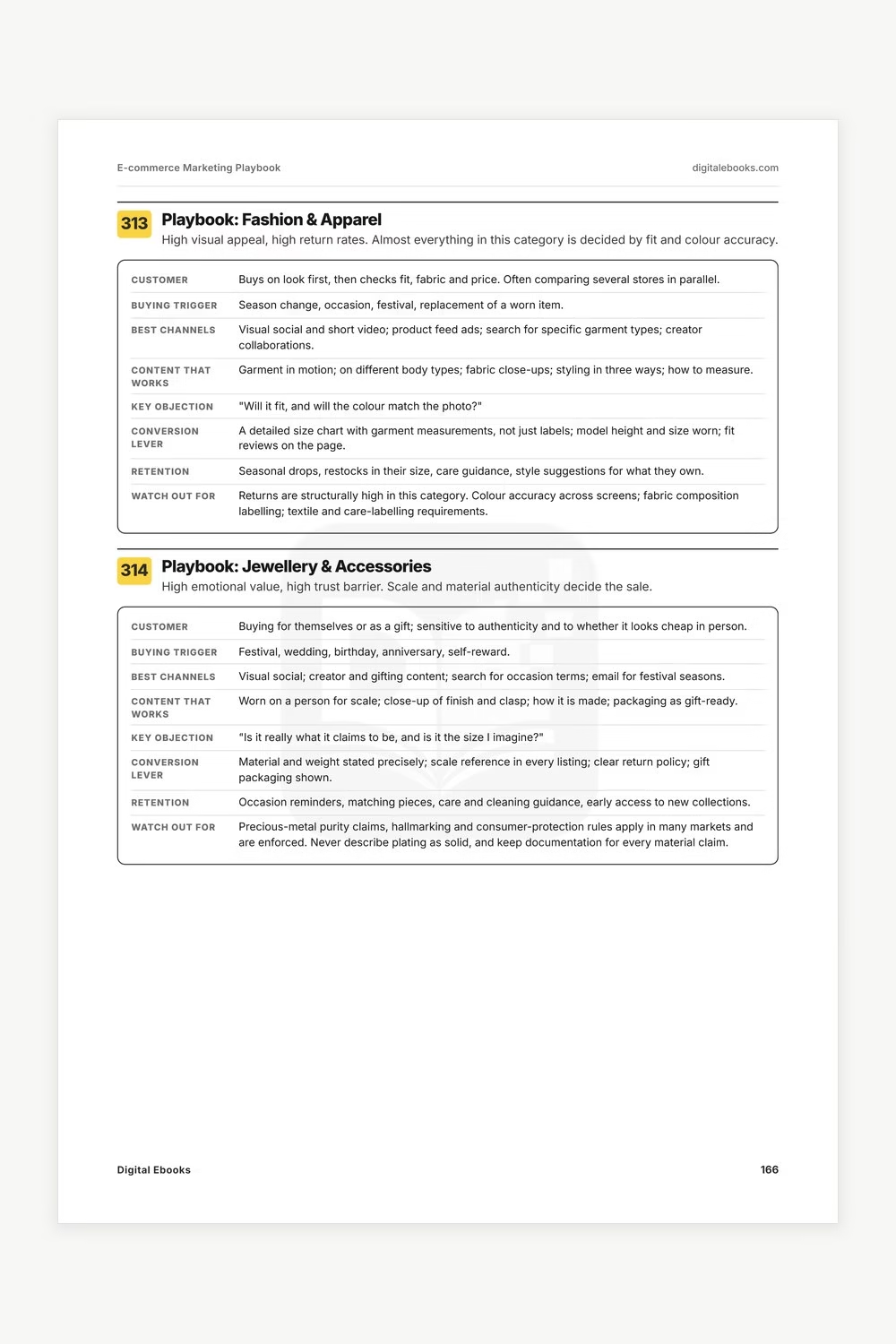
- 18 business-type playbooks covering fashion, jewellery, beauty, home and kitchen, furniture, food, supplements, baby and kids, electronics, fitness, stationery, handmade, pet supplies, digital products, subscription boxes, B2B, print on demand and hyperlocal delivery.
- 575 ready-made ideas — 100 content ideas, 50 Reel ideas, 30 carousels, 30 Story ideas, 50 hooks, 50 CTAs, 30 caption templates, 20 Reel scripts, 20 Story sequences, 20 DM templates, 70 WhatsApp templates and 25 email templates with four complete five-email sequences.
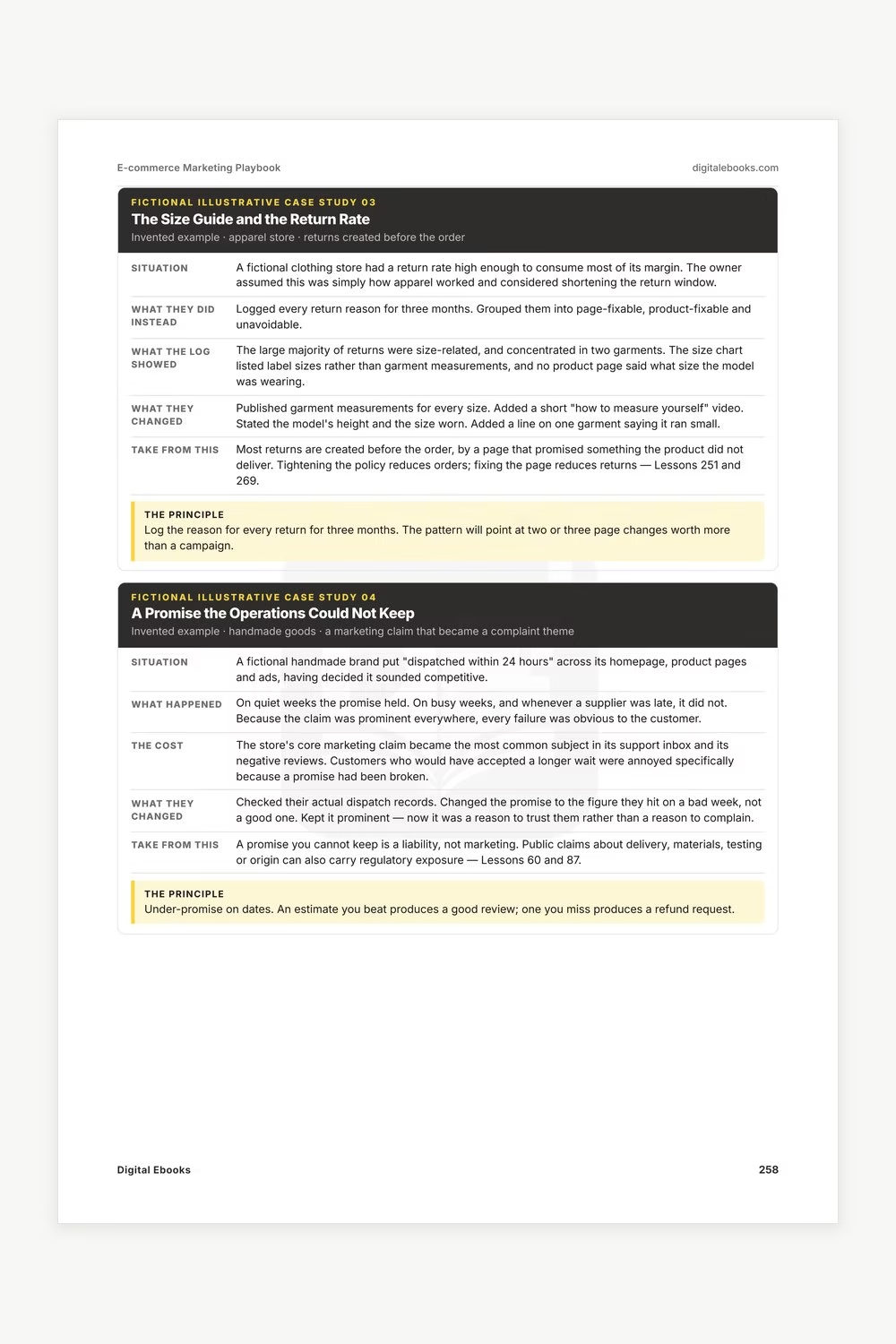
- 15 fictional illustrative case studies, including several where the store got it wrong and what it cost.
- A 30-day plan and a 90-day growth plan, each day with its objective, exact action, time required, tools needed, expected output and completion check — plus three decision gates that stop you scaling something broken.
- A KPI dashboard, four budget scenarios (₹10,000 / ₹25,000 / ₹50,000 / ₹1,00,000 a month) and a 17-section marketing audit with 123 checks.
The arithmetic other marketing books skip
- Your affordable cost per order — worked line by line from average order value through goods, shipping, packaging, gateway fees, returns and overheads
- Why ROAS is not profit — with a worked example showing a campaign at 3× reported ROAS losing money on every order
- Break-even ROAS — the number to write on a card and compare every campaign against
- Lifetime gross margin — and why you should not spend to the ceiling
- Contribution after marketing — the single number that says whether any of this is working
- Channel contribution per hour — because organic channels cost your time, and your time is not free
Every prompt card includes
- A numbered title (P001–P104)
- When to use it
- The copy-ready prompt, with placeholders in square brackets
- The inputs you need to gather first
- The expected output
- A worked example from a real type of store
What the 25 parts cover
Marketing fundamentals · customer and market research · positioning and offer · brand strategy · website and store marketing · SEO · content · social media and Instagram · WhatsApp and messaging · email · influencers and creators · affiliate and referral · paid advertising · conversion optimisation · retention and loyalty · analytics · budget and planning · business-type playbooks · the prompt library · the 30-day plan · the 90-day plan · worksheets · templates · case studies · the complete marketing audit.
Built for Indian online stores
- Prices in rupees, with UPI, cash on delivery, RTO costs, WhatsApp and the festival calendar treated as the everyday reality they are
- Worked examples across D2C brands, Shopify and WooCommerce stores, marketplace sellers, Instagram and WhatsApp sellers, handmade and small-batch brands
- Budget scenarios starting at ₹10,000 a month, because that is where most stores actually are
- A marketing operating system of four recurring habits: 30 minutes daily, 2 hours weekly, half a day monthly, one day quarterly
What this book will not do
- It will not promise you sales, revenue, customers, rankings, reach, followers, ROAS or profitability — and it explains why any book that does should be treated with suspicion
- It will not teach fabricated reviews, fake scarcity, resetting countdown timers, inflated “original” prices, undisclosed paid promotion, bought followers, engagement pods or unsolicited bulk messaging — all of which breach platform terms and, in most markets, consumer law
- It will not present platform features as permanent — every platform-specific detail carries an explicit note that it changes and must be verified against current documentation
- It will not pretend attribution is solved — there is a whole section on why two ad platforms will each claim the same sale, and what to do about it
Who this book is for
- Store owners who are also the packer, the photographer and the support desk
- D2C founders who have launched and cannot work out why the traffic is not converting
- Sellers who have tried ads, lost money, and want to understand what actually went wrong
- Instagram and WhatsApp sellers building towards a proper store
- Anyone who would rather have a checklist and a calculation than a motivational thread
eBook details
- Format: PDF (A4, with clickable contents and bookmarks)
- Pages: 276
- Lessons: 330 · Prompts: 104 · Playbooks: 18
- Worksheets: 25 printable · Templates: 25
- Language: English
- Edition: 2026
- Delivery: instant download after purchase
This book is for information and education only. Marketing outcomes vary based on your product, market, pricing, margin, competition, timing, regulation, resources and the quality of your execution. Nothing here is a promise, guarantee or projection of sales, revenue, traffic, rankings, followers, return on ad spend or profitability, and any figures shown are illustrative planning examples rather than market data or benchmarks. All case studies are fictional and clearly labelled as such. Budget scenarios are illustrative planning examples, not performance models. Marketing platforms, advertising products, algorithms, fees, policies and features change frequently — always verify current details with the provider. This book is not legal, tax, financial or accounting advice, and it is not a substitute for advice from a qualified professional in your jurisdiction on consumer protection, data protection, advertising standards, product labelling or any other regulatory obligation. Product names and trademarks belong to their respective owners; this is an independent publication and is not affiliated with or endorsed by any platform, marketplace or advertising provider.
Reviews
Related products
-
AI Tools for Small Businesses
A practical AI handbook for small businesses with 105 copy-ready prompts for marketing, sales, WhatsApp, custo…
-
Build a Business with AI
A practical AI startup playbook: 150 chapters taking you from idea to validation, business model, offer, brand…
-
WordPress Business Website Guide
A practical handbook to plan, build, launch and grow a professional WordPress business website: strategy, doma…
-
Start a Business Under ₹50,000 in India
A practical beginner's guide to choosing, launching and growing a small business with ₹50,000 or less.
There are no reviews yet.